Churn, predicted before the cancel button.
On targeted at-risk cohorts
By tenure, box, and behavior
Early enough to intervene
Figures are approximate and rounded to protect client confidentiality; exact numbers are withheld.
The problem.
Retention was managed after the fact, the team learned a member was gone when the cancellation came through. Churn was a single blended number that hid which cohorts were leaving, when, and why, so every save attempt was late and untargeted.
The approach.
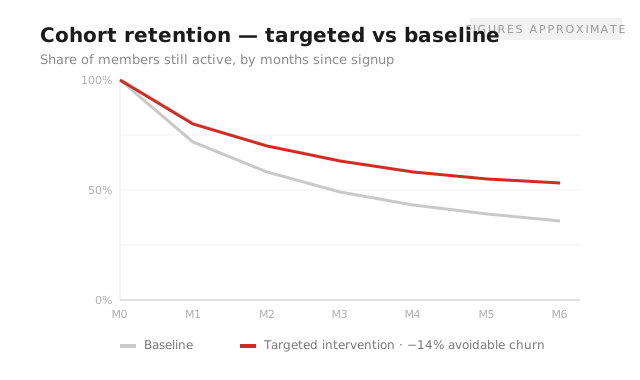
I built cohort-level churn curves, by tenure, by box, by engagement behavior, and a model that flagged the early signals of a member drifting toward cancellation. That let retention spend go where it paid: the at-risk members whose lifetime value justified an intervention, reached while it still mattered.
The outcome.
Avoidable churn on the targeted cohorts fell 14%, and retention shifted from reactive to predictive, the team acting on early signals instead of processing cancellations. In a subscription business, that compounds every month.
From the work.
If you learn a member's gone when they cancel, that's a signal you could have caught earlier, I'll build the model that catches it. One slot open for Q3 2026.