Turning a returns problem into a margin lever.
From return-driven decisions
Style, size, and reason isolated
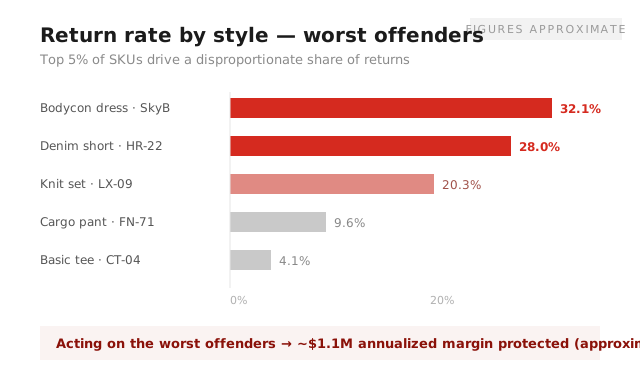
The styles quietly bleeding margin
Figures are approximate and rounded to protect client confidentiality; exact numbers are withheld.
The problem.
Returns were logged as a cost of doing business, a single blended rate nobody could act on. That average hid the truth: a small share of styles and sizes drove a large share of the returns, and no one had isolated them.
The approach.
I built a SKU-level returns model: return rate by style, by size, and by reason code, joined to margin. That surfaced the worst offenders and the patterns behind them, sizing that ran off, descriptions that oversold, photography that misled, and translated each into a concrete merchandising or product-page move.
The outcome.
Returns became a decision input instead of a write-off. Acting on the worst offenders protected roughly $1.1M of annualized margin and gave merchandising a repeatable signal, the styles to fix, re-shoot, or retire before they shipped losses.
From the work.
If returns are a blended rate you can't act on, I'll break them down to the SKU and show you the margin hiding inside. One slot open for Q3 2026.