We forecast their biggest sale before it ran.
Modeled before the sale ran
Every prior birthday sale, normalized
Concrete moves for the next run
The problem.
The birthday sale drives a large share of annual revenue, but it was planned on last year's gut read. There was no forecast, no benchmark for what "good" looked like, and no structured view of which levers actually moved it. The biggest event of the year ran on the same instinct as everything else.
The approach.
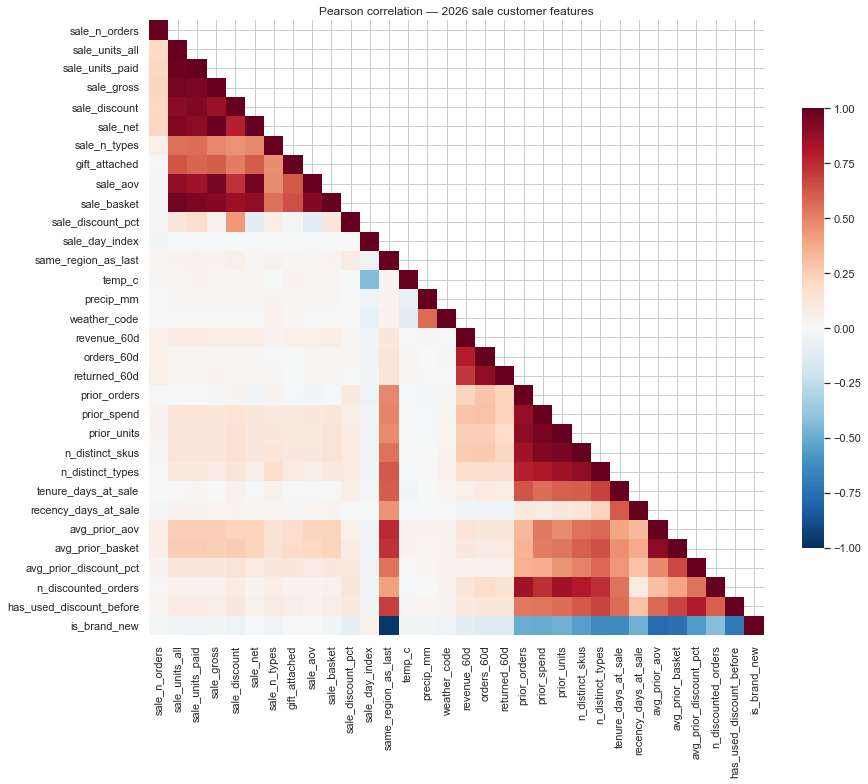
I pulled every prior birthday sale and normalized them into a single comparable benchmark, then built a forecast for the upcoming one. From there I went past the headline number: which products carried the sale, where the discounting overreached, and which channels actually converted. That became a short, concrete list of recommendations to lift the next run. (Client figures are anonymized here to protect an active sales playbook.)
The outcome.
The team went into their biggest sale of the year with a forecast, a benchmark to beat, and a specific list of moves, instead of a gut feel and last year's spreadsheet. The birthday sale became a repeatable, measured event the business can plan around, not an annual guess.
From the work.
If your marquee sale runs on last year's instinct, I'll turn your own history into a forecast and a benchmark. One slot open for Q3 2026.